
Choosing the Right Peptide Matters More Than Following the Hype
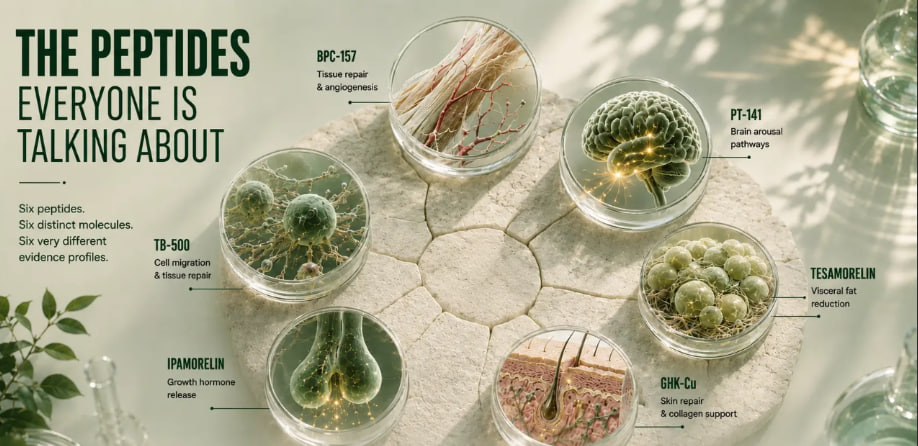
Peptide products are growing fast. BPC-157, TB-500, PT-141, Ipamorelin, Tesamorelin, and GHK-Cu each target different needs. Some people want faster recovery, some want better body composition, some focus on sexual health, and others want improved skin. Knowing your goal first—then choosing the matching peptide—leads to a better experience.
If You Train Hard and Get Injured Easily: BPC-157 and TB-500
BPC-157, often called the "Wolverine Peptide," mainly supports natural repair of tendons, ligaments, muscles, and the gut. Preclinical studies suggest it supports angiogenesis, nitric oxide signaling, and growth factor activity. TB-500 comes from the active region of thymosin beta-4, helping transport actin to injury sites and supporting soft tissue recovery and flexibility. The two are often stacked as the "Wolverine Stack," making them suitable for people with high training volume, slow recovery, or a need for faster repair.
If You Want Better Body Composition and Anti-Aging: Ipamorelin and Tesamorelin
Ipamorelin is a highly selective growth hormone secretagogue. It stimulates the pituitary to release growth hormone naturally via GHS-R1a while avoiding significant effects on cortisol, ACTH, prolactin, or appetite. It suits those focused on anti-aging, recovery capacity, and body composition. Tesamorelin is an FDA-approved GHRH analog marketed as Egrifta, backed by full Phase III data showing significant visceral fat reduction. In March 2025, the FDA also approved EGRIFTA WR, a once-weekly formulation. For those focused on abdominal fat and body composition, Tesamorelin is one of the most evidence-backed options.
If You Focus on Sexual Health: PT-141
PT-141 (bremelanotide, Vyleesi) is an FDA-approved cyclic heptapeptide for premenopausal HSDD. Its benefit is acting through melanocortin MC3R and MC4R receptors in the brain rather than on blood vessels like Viagra. For people who do not respond to PDE-5 inhibitors, PT-141 may also help. By targeting central mechanisms of sexual motivation and reward, it has drawn attention in sexual health circles.
If You Focus on Skin Repair and Anti-Aging: GHK-Cu
GHK-Cu is a naturally occurring copper-binding peptide found in human plasma, saliva, and wound exudate. Its benefits center on skin repair, collagen synthesis, and anti-aging. Multiple controlled human studies confirm GHK-Cu improves skin density, thickness, wrinkle depth, and elasticity. Since GHK-Cu levels decline with age—from about 200 ng/ml at 20 to about 80 ng/ml at 60—supplementation is especially appealing for those focused on skin health.
Usage Notes: Injection and Half-Life
Most peptides require injection because oral use leads to rapid breakdown by digestive enzymes. Their short half-lives mean precise dosing strategies are necessary. Product choice should be based on individual needs, goals, and acceptable protocols.
Conclusion
BPC-157 and TB-500 suit recovery needs, Ipamorelin and Tesamorelin suit body composition and anti-aging goals, PT-141 suits sexual health, and GHK-Cu suits skin repair. Choosing the right direction helps peptides deliver their intended benefits.